
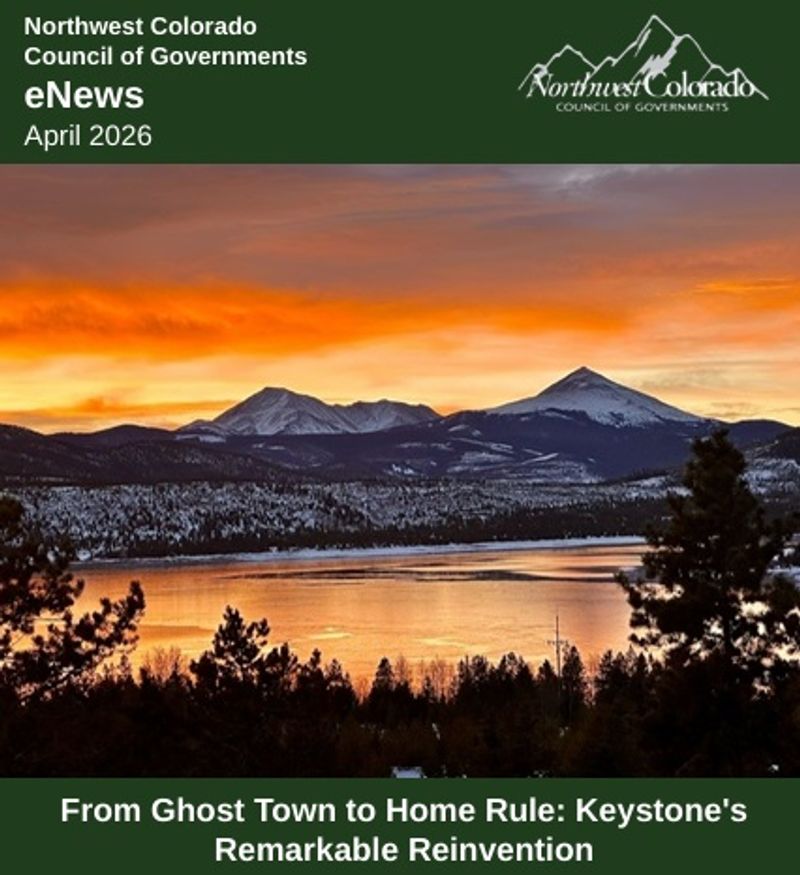
From Ghost Town to Home Rule: Keystone's Remarkable Reinvention
Read the Full Article HERE
Keystone has always been a place that refuses to stay still. Homesteads and mines gave way to logging and rail in the 1800s. By the 1930s, it was a ghost town. Then in 1970, a ski resort brought it back to life. And in 2024, Keystone completed its latest transformation — becoming Colorado's newest municipality. If you've been around the Colorado high country long enough, you know that kind of arc doesn't happen by accident.
Rewind to the mid-1990s. The resort had expanded to three mountains, two base areas, a lakeside village, two golf courses, and trail access into the National Forest — a genuine year-round community. About 700 full-time residents called Keystone home, and some of them were already asking a question that would take decades to answer: should this place incorporate? The resort was changing hands — Vail Resorts was the buyer — and as Bill Bergman, one of the resort's founders, put it, the timing just wasn't right.
Fast forward to 2020. Keystone had grown into one of Summit County's major resort communities. Over 3,500 residences. Two thousand short-term rentals. Twelve hundred full-time residents, another 4,000 part-timers, and winter peak weekends pulling in 25,000 visitors. Traffic and pedestrian safety along US 6 were becoming serious concerns, resort-built infrastructure was aging with no clear entity responsible for maintenance, and Summit County — effective as it is as a regional government — was not built to address the hyper-local needs of a place like Keystone. Anyone who has worked in or around resort communities in our region knows this dynamic well.
So, the question came back around: Could Keystone make it as a town without raising taxes? A core group of residents started digging in, consulting with Summit County, NWCCOG, and the Colorado Department of Local Affairs. The feasibility study delivered a compelling answer: yes. Due to the county's existing tax structure, incorporation would redirect more than $7.5 million annually from Summit County to the new town — enough to cover the current level of local services. That's a significant number, and it gave the effort real legs.
Here's where Keystone's story gets especially interesting for anyone who follows municipal governance in Colorado. Rather than take the conventional route — become a statutory town first, figure out home rule later — residents decided to go straight to home rule. That meant combining the state's incorporation and home rule processes, adding roughly six months to the timeline, but giving the new town far more autonomy and flexibility from day one. “I was encouraged by the positive attitudes and participation of the entire community to erect a town from the ground up,” said Keystone Town Council member, Dan Sullivan.
More than 50 volunteers drove the effort forward — a petition drive, the formation of a Charter Commission, the drafting of a Town Charter, and the creation of an Election Commission. Three separate elections were required: one to approve incorporation and elect the Charter Commission, one to approve the Charter, and one to elect the Town Council. With guidance from the Colorado Municipal League and an experienced attorney, the whole thing took two years from committee formation to home-rule incorporation. That's a sprint, not a marathon.
And then came one of the smartest moves in the whole process. Three months before the town council was even elected, residents formed a transition committee — made up of all the council candidates, supported by a former county and town manager, a legal advisor, and community volunteers — to prepare for day-one operations. That early coordination proved critical. On day one, the town had an interim manager, a clerk, and a community development director in place. Interim financing was secured. The administrative and regulatory framework was already taking shape.
Two years in, Keystone has been fully operational and staffed. Ordinances, resolutions, and intergovernmental agreements are in place. A Comprehensive Plan is complete. The first US 6 safety infrastructure project is done, with more underway. Roads and trails are being maintained. A joint police department has been formed with the neighboring Town of Dillon — a great example of the kind of regional collaboration we champion at NWCCOG. Community committees are actively working on the town's shared future, and the town is building a collaborative relationship with Keystone Resort, recognizing that their futures are intertwined.
Looking ahead, Keystone is entering its next phase. This year, with extensive public engagement, the town will develop its first Strategic Plan and a Trails and Open Space Master Plan to shape the next 10 to 20 years. The community — full-time residents, part-timers, second homeowners, workforce, and businesses — will determine what kind of town Keystone becomes and the services it provides for generations to come.
From where I sit, having watched this process from the beginning, Keystone's story is one of the more impressive examples of community self-determination I've seen in nearly a decade at NWCCOG. It's a case study in what happens when residents do their homework, plan meticulously, and refuse to wait for someone else to solve their problems. The future is bright up there — and it belongs to the people who built it.
Jon Stavney
Executive Director, NWCCOG
Originally posted by Summit Chamber of Commerce via Locable